
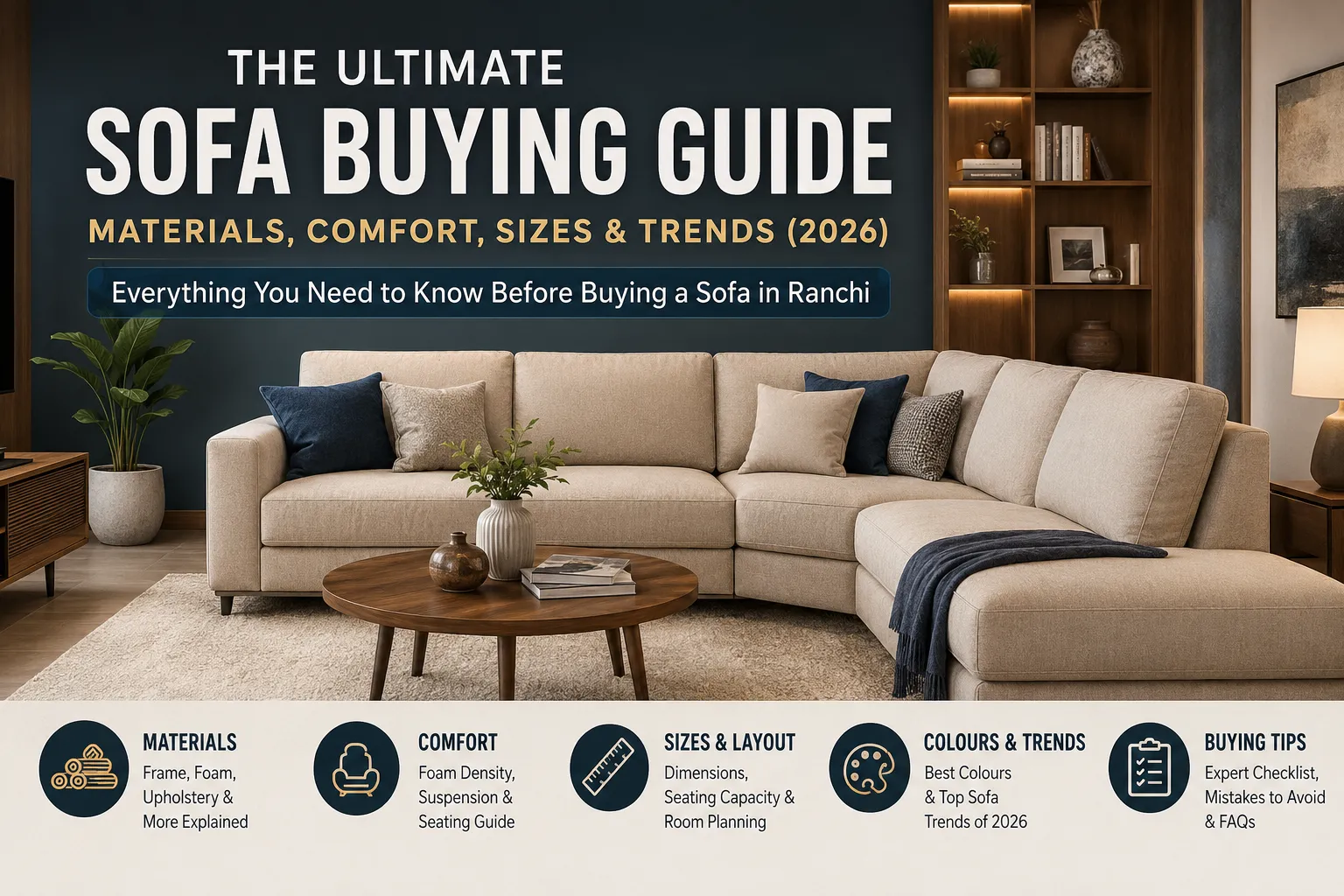
The Complete Sofa Buying Guide in Ranchi (2026): How to Choose the Perfect Sofa for Your Home
Your sofa is more than just a piece of furniture—it's where your family gathers, guests are welcomed, conversations happen, and everyday moments are shared. Whether you're watching a movie, entertaining friends, working from home, or simply relaxing after a long day, the right sofa plays a central role in both comfort and the overall design of your living room.
Because a sofa is one of the most frequently used pieces of furniture in any home, choosing the right one requires more than selecting a design that looks attractive. Comfort, frame quality, upholstery, foam density, seating dimensions, durability, and maintenance all contribute to how well a sofa performs over the years.
Today's homeowners can choose from an enormous variety of options, including fabric sofas, leather sofas, wooden sofas, modular sofas, L-shaped sectionals, recliner sofas, sofa-cum-beds, and fully custom-built designs. While this variety offers greater flexibility, it can also make the buying process overwhelming.
Two sofas may appear almost identical in a showroom yet differ significantly in build quality, seating comfort, structural strength, upholstery performance, and expected lifespan. Understanding these differences before making a purchase can help you avoid costly mistakes and ensure your investment delivers long-term value.
If you're planning to buy a sofa in Ranchi, it's also important to consider your room size, family requirements, maintenance preferences, and interior style. The ideal sofa should complement your living space while providing lasting comfort for everyday use.
This comprehensive sofa buying guide explains everything you need to know before purchasing a sofa. You'll learn about different sofa types, frame materials, upholstery fabrics, foam density, seating comfort, standard dimensions, colour trends, maintenance tips, and common buying mistakes. Whether you're furnishing a compact apartment, a spacious family home, or looking for custom furniture in Ranchi, this guide will help you make an informed decision with confidence.
Why Choosing the Right Sofa Matters
A sofa is often the centerpiece of a living room and one of the most frequently used pieces of furniture in a home. It's where families relax after a long day, guests are entertained, children play, and countless memories are created. Because of its daily use, a sofa should offer the right balance of comfort, durability, functionality, and style.
Unlike decorative furniture, a sofa experiences constant wear. The quality of its frame, cushions, upholstery, and construction directly affects how comfortable it remains over the years. A well-built sofa retains its shape, supports proper posture, and withstands everyday use, while a poorly constructed one may sag, lose support, or show signs of damage much sooner than expected.
Today's homeowners also have a wider range of options than ever before. From compact loveseats and traditional wooden sofas to spacious L-shaped sectionals, modular sofas, recliners, and sofa-cum-beds, every design serves a different purpose. Understanding these differences helps ensure you choose a sofa that fits both your living space and your lifestyle.
If you're buying a sofa in Ranchi, it's worth considering additional factors such as family size, room dimensions, climate, maintenance preferences, and how the sofa will be used. A sofa for a busy family with young children may need durable, stain-resistant upholstery, while a formal living room may prioritize premium finishes and elegant design.
Rather than asking:
"Which sofa looks the best?"
A better question is:
"Which sofa will provide the right comfort, durability, and functionality for my family over the next 10 to 15 years?"
Thinking this way helps you make a purchase that offers genuine long-term value instead of focusing only on appearance.
Questions to Ask Before Buying a Sofa
Before comparing sofa styles, fabrics, or colours, take a few minutes to understand exactly what you need. Every home is different, and answering a few practical questions can make the buying process much easier.
Ask yourself:
- How many people will use the sofa every day?
- Is it for a living room, family room, office, or guest room?
- Do you entertain guests frequently?
- Do you need a compact sofa for an apartment or a large sectional for a spacious home?
- Do you have children or pets?
- Would you prefer fabric, leather, or wooden upholstery?
- Is easy maintenance a priority?
- Do you need additional features like storage, recliners, or a sofa-cum-bed?
- How much space is available in your living room?
- What style best matches your home's interior?
Understanding your answers will help narrow your choices and prevent you from buying a sofa that looks attractive but doesn't meet your practical needs.
Types of Sofas
There is no single sofa that's perfect for every home. The right choice depends on your room size, seating requirements, interior style, and daily usage.
Some sofas prioritize comfort, while others focus on maximizing seating or saving space.
The most popular sofa types include:
- 3-Seater Sofa
- 2-Seater Sofa (Loveseat)
- L-Shaped Sofa
- Sectional Sofa
- Modular Sofa
- Recliner Sofa
- Wooden Sofa
- Sofa Cum Bed
- Chesterfield Sofa
- Chaise Lounge
- Corner Sofa
- Custom Sofa
Each type offers unique advantages depending on your lifestyle and living room layout.
3-Seater Sofa
A three-seater sofa is one of the most versatile choices for modern homes. It comfortably seats three adults while fitting well into most living rooms.
Advantages
- Comfortable family seating
- Suitable for most room sizes
- Available in countless styles
- Easy to pair with accent chairs
- Excellent long-term investment
Best For
- Apartments
- Family homes
- Living rooms
- Guest seating
2-Seater Sofa (Loveseat)
Loveseats are compact sofas designed for two people. They work well in smaller homes or as additional seating alongside larger sofas.
Advantages
- Space-saving
- Lightweight
- Easy to move
- Affordable
- Works well with 3-seater sofas
Best For
- Apartments
- Offices
- Bedrooms
- Reading corners
L-Shaped Sofa
L-shaped sofas maximize seating while making efficient use of room corners. They have become one of the most popular choices for contemporary homes because they provide generous seating without requiring multiple individual sofas.
Advantages
- Large seating capacity
- Excellent for family gatherings
- Makes good use of corners
- Modern appearance
- Great for open-plan living rooms
Best For
- Large families
- Modern apartments
- Villas
- Open living spaces
Sectional Sofa
Sectional sofas consist of multiple pieces that can often be rearranged to suit different room layouts.
This flexibility makes them an excellent option for homeowners who like to adapt their living spaces over time.
Advantages
- Flexible layouts
- High seating capacity
- Modern aesthetics
- Easy to expand
- Custom configurations
Best For
- Large homes
- Luxury interiors
- Entertainment spaces
Recliner Sofa
Recliner sofas are designed with adjustable backrests and footrests that provide enhanced comfort for relaxing, watching television, or reading.
Many modern recliners also include USB charging ports, cup holders, and power-adjustable seating.
Advantages
- Superior comfort
- Excellent lumbar support
- Adjustable seating positions
- Luxury appearance
Best For
- Home theatres
- Family rooms
- Entertainment space
Wooden Sofa
Wooden sofas remain popular because of their timeless appearance, durability, and traditional craftsmanship.
Depending on the design, they can complement both classic and modern interiors.
Advantages
- Long lifespan
- Strong construction
- Easy to maintain
- Elegant natural appearance
- Timeless design
Best For
- Traditional homes
- Premium interiors
- Long-term furniture investment
Sofa Cum Bed
A sofa-cum-bed combines seating with sleeping functionality, making it ideal for homes where space is limited.
Advantages
- Dual-purpose furniture
- Saves space
- Ideal for guests
- Practical for apartments
Best For
- Studio apartments
- Guest rooms
- Small homes
Modular Sofa
Modular sofas consist of separate seating units that can be rearranged into different configurations.
This flexibility allows homeowners to adapt the sofa as their needs change.
Advantages
- Flexible design
- Easy to expand
- Modern appearance
- Custom layouts
Best For
- Contemporary homes
- Large living rooms
- Families
Custom Sofa
A custom sofa is designed specifically for your home, allowing you to choose the exact dimensions, upholstery, comfort level, frame material, and overall style.
This is often the best option for homeowners who want furniture tailored to their living space.
Advantages
- Personalized dimensions
- Choice of fabrics
- Custom comfort
- Premium materials
- Better room utilization
- Unique design
Best For
- Luxury homes
- Interior design projects
- Custom living rooms
- Long-term furniture investment
Sofa Frame Materials Explained
The frame is the foundation of every sofa. While upholstery and cushions determine how a sofa looks and feels, the frame determines how long it lasts. A high-quality frame provides stability, supports daily use, prevents sagging, and keeps the sofa structurally strong for many years.
Unfortunately, the frame is also one of the most overlooked aspects when buying a sofa. Two sofas may look nearly identical from the outside but differ significantly in durability because of the materials used inside.
If you're investing in a sofa for long-term use, understanding frame materials is essential.
Solid Wood Frames
Solid hardwood is widely regarded as the best material for premium sofa frames. Woods such as teak, oak, ash, and Sheesham are known for their strength, stability, and long lifespan.
Properly seasoned hardwood resists bending and cracking, making it an excellent choice for sofas that will see heavy daily use.
Advantages
- Exceptional durability
- Strong load-bearing capacity
- Long lifespan
- Easy to repair and refinish
- Premium quality construction
Disadvantages
- Higher cost
- Heavier than other materials
- Requires properly seasoned wood to avoid warping
Best For
- Premium homes
- Luxury furniture
- Families looking for long-term durability
Plywood Frames
High-quality plywood is another excellent choice for sofa frames. It is manufactured by bonding multiple layers of wood veneer together, creating a stable and durable material that resists twisting and cracking better than many solid woods.
Marine-grade or hardwood plywood is commonly used in premium furniture because of its strength and moisture resistance.
Advantages
- Strong and stable
- Lightweight compared to solid wood
- Resistant to warping
- Cost-effective
- Excellent durability
Disadvantages
- Quality varies significantly
- Lower-grade plywood may weaken over time
Best For
- Modern sofas
- Modular sofas
- Custom furniture
Engineered Wood Frames
Engineered wood includes materials such as MDF, particle board, and similar composite products. These materials are more affordable but are generally less durable than hardwood or high-quality plywood.
They may be suitable for light use but are not ideal for sofas that experience heavy daily use.
Advantages
- Budget-friendly
- Smooth finish
- Lightweight
- Easy to manufacture
Disadvantages
- Lower structural strength
- Can weaken with moisture exposure
- Shorter lifespan
- Difficult to repair
Best For
- Budget furniture
- Temporary seating
- Low-traffic rooms
Metal Frames
Steel and aluminum frames are commonly used in contemporary sofas, recliners, sofa-cum-beds, and modular furniture. Powder-coated steel provides excellent structural strength and is resistant to corrosion when properly finished.
Advantages
- Very strong
- Lightweight options available
- Modern appearance
- Resistant to pests
- Low maintenance
Disadvantages
- May feel less warm than wood
- Lower-quality metal frames can squeak over time
Best For
- Modern interiors
- Recliners
- Modular sofas
- Commercial spaces
Which Sofa Frame Material Is Best?
The ideal frame depends on your budget, intended use, and expected lifespan.
| Frame Material | Durability | Price | Maintenance | Recommended For |
| -------------------- | ---------- | -------------- | ----------- | ---------------------- |
| Solid Hardwood | Excellent | Premium | Low | Luxury & long-term use |
| High-Quality Plywood | Very Good | Mid to Premium | Low | Most modern homes |
| Metal | Very Good | Mid to Premium | Very Low | Contemporary furniture |
| Engineered Wood | Moderate | Budget | Moderate | Light household use |
For most homeowners, a sofa built with solid hardwood or premium plywood offers the best balance of durability, comfort, and value.
Foam Density & Cushion Guide
The cushions determine how comfortable a sofa feels on the first day—and how comfortable it remains after years of use. High-quality foam retains its shape, provides consistent support, and prevents the seat from sagging prematurely.
Many buyers focus on softness alone, but foam density is a much more important indicator of long-term performance.
What Is Foam Density?
Foam density refers to the amount of material packed into a cubic meter of foam. Higher-density foam generally offers better durability, improved support, and a longer lifespan.
It is different from firmness. A high-density foam can still feel soft if it is designed that way.
Low-Density Foam (Below 28 kg/m³)
Low-density foam is inexpensive and feels soft initially, but it tends to lose its shape quickly under regular use.
Suitable For
- Occasional seating
- Guest rooms
- Budget furniture
Medium-Density Foam (30–35 kg/m³)
Medium-density foam provides a comfortable balance between softness and support. It is suitable for many households and performs well with moderate daily use.
Suitable For
- Family living rooms
- Apartments
- Everyday comfort
High-Density Foam (40–45 kg/m³)
High-density foam offers excellent resilience and long-term comfort. It resists sagging, maintains its shape, and supports the body more effectively over time.
Suitable For
- Premium sofas
- Daily use
- Large families
- Luxury furniture
High-Resilience (HR) Foam
High-Resilience (HR) foam is considered one of the best options for premium sofas. It combines excellent comfort with superior durability and recovers its original shape quickly after use.
Advantages
- Outstanding comfort
- Long lifespan
- Better pressure distribution
- Excellent shape retention
Best For
- Luxury sofas
- High-end custom furniture
- Everyday use
Cushion Filling Options
Modern sofas may use different cushion fillings depending on the desired level of comfort.
Foam
- Excellent support
- Long-lasting
- Most common choice
Feather & Down
- Extremely soft
- Luxurious feel
- Requires regular fluffing
- Higher maintenance
Fiber Fill
- Soft and lightweight
- Affordable
- Less durable than foam
Hybrid Cushions
These combine high-density foam with fiber or feather wrapping to provide both comfort and support. They are commonly found in premium sofas because they offer a plush seating experience while maintaining shape over time.
Expert Recommendation
For most homeowners buying a sofa in Ranchi, high-density foam (40–45 kg/m³) combined with a solid hardwood or premium plywood frame provides the best balance of comfort, durability, and long-term value. While it may cost more initially, it typically performs better over many years of everyday use.
Sofa Upholstery Materials Explained
The upholstery is the outer covering of a sofa, and it plays a major role in comfort, appearance, durability, and maintenance. While the frame determines how long a sofa lasts, the upholstery determines how it feels, how easy it is to clean, and how well it fits your lifestyle.
Choosing the right upholstery depends on several factors, including your budget, climate, family size, pets, children, and how often the sofa will be used.
From soft fabric sofas to luxurious genuine leather and durable performance fabrics, each material has its own advantages and limitations.
Fabric Sofa
Fabric remains one of the most popular upholstery choices because it offers comfort, versatility, and an extensive range of colours, textures, and patterns.
Modern upholstery fabrics are designed to be durable while providing a warm and inviting seating experience.
Advantages
- Soft and comfortable
- Wide variety of colours and textures
- Suitable for every interior style
- More affordable than genuine leather
- Comfortable in all seasons
Disadvantages
- Can absorb spills if untreated
- Requires regular vacuuming
- Some fabrics stain more easily
Best For
- Family homes
- Apartments
- Daily use
- Modern living rooms
Genuine Leather Sofa
Genuine leather is considered a premium upholstery material that develops character over time. It offers excellent durability and creates an elegant, timeless appearance.
A well-maintained leather sofa can last for decades.
Advantages
- Luxurious appearance
- Extremely durable
- Easy to wipe clean
- Ages beautifully
- Long lifespan
Disadvantages
- Higher price
- Requires periodic conditioning
- Can feel cool in winter and warm in summer
- Scratches more easily than fabric
Best For
- Luxury homes
- Formal living rooms
- Premium interiors
Leatherette (PU Leather)
Leatherette, also known as PU leather or faux leather, offers the appearance of genuine leather at a more affordable price.
Modern leatherette has improved significantly in quality and is commonly used in contemporary furniture.
Advantages
- Budget-friendly
- Easy to clean
- Water-resistant
- Modern appearance
- Low maintenance
Disadvantages
- Shorter lifespan than genuine leather
- Can peel after years of use
- Less breathable
Best For
- Budget-conscious buyers
- Rental properties
- Offices
- Contemporary homes
Velvet Upholstery
Velvet gives a sofa a rich, luxurious appearance with its soft texture and elegant finish. It is commonly used in premium interiors and statement furniture.
Advantages
- Elegant appearance
- Soft touch
- Premium feel
- Rich colour depth
Disadvantages
- Requires regular care
- Can attract dust
- Shows pressure marks
Best For
- Luxury interiors
- Formal seating
- Designer living rooms
Linen Upholstery
Linen is valued for its natural texture, breathability, and relaxed aesthetic. It creates a light and airy appearance that's particularly suited to modern and minimalist interiors.
Advantages
- Breathable
- Natural appearance
- Comfortable in warm climates
- Eco-friendly
Disadvantages
- Wrinkles easily
- Stains more readily
- Requires careful maintenance
Best For
- Contemporary homes
- Scandinavian interiors
- Minimalist spaces
Cotton Blend Upholstery
Cotton-blend fabrics combine natural cotton with synthetic fibers to improve durability while maintaining comfort.
Advantages
- Soft and breathable
- Comfortable
- Good durability
- Affordable
Disadvantages
- May fade with prolonged sunlight
- Needs regular cleaning
Best For
- Everyday family use
- Apartments
- Budget to mid-range furniture
Performance Fabrics
Performance fabrics are engineered to resist stains, moisture, fading, and everyday wear. They are becoming increasingly popular among families with children and pets.
Advantages
- Stain-resistant
- Water-repellent
- Highly durable
- Easy maintenance
- Long-lasting appearance
Disadvantages
- Slightly higher cost
- Limited premium textures compared to luxury fabrics
Best For
- Homes with children
- Pet owners
- High-traffic living rooms
Fabric vs Leather vs Leatherette
Choosing between fabric, leather, and leatherette depends on your lifestyle, maintenance preferences, and budget.
| Feature | Fabric | Genuine Leather | Leatherette |
| ----------------- | ------------------------- | --------------- | ----------- |
| Comfort | Excellent | Very Good | Good |
| Durability | Very Good | Excellent | Good |
| Maintenance | Moderate | Easy | Easy |
| Breathability | Excellent | Good | Moderate |
| Luxury Appearance | Good | Excellent | Very Good |
| Price | ₹₹ | ₹₹₹₹ | ₹₹ |
| Pet Friendly | Good (performance fabric) | Moderate | Moderate |
| Child Friendly | Excellent | Very Good | Very Good |
| Lifespan | 8–15 Years | 15–25+ Years | 5–10 Years |
Which Upholstery Is Best?
The best upholstery depends on how you use your sofa.
- Choose fabric if you want maximum comfort, variety, and value for everyday family living.
- Choose genuine leather if you're looking for premium aesthetics, long-term durability, and timeless appeal.
- Choose leatherette if you prefer the look of leather at a lower price with easier maintenance.
- Choose performance fabrics if you have young children, pets, or expect heavy daily use.
- Choose velvet or linen if your priority is creating a distinctive, designer-style interior.
There is no single upholstery that's ideal for everyone. The right choice is the one that matches your home's lifestyle, maintenance expectations, and budget.
Sofa Suspension Systems
While the frame provides structural strength and the cushions determine comfort, the suspension system supports the seat and distributes body weight evenly. A quality suspension prevents sagging, improves comfort, and extends the life of your sofa.
Sinuous Spring (Zig-Zag Spring)
The most common suspension system in modern sofas, using S-shaped steel springs fixed across the frame.
Advantages
- Excellent support
- Durable
- Affordable
- Low maintenance
Best For
- Most modern sofas
- Daily household use
Eight-Way Hand-Tied Springs
Considered the gold standard in luxury furniture, this traditional system ties each spring individually by hand in multiple directions.
Advantages
- Exceptional comfort
- Superior weight distribution
- Long lifespan
- Premium seating experience
Disadvantages
- Expensive
- Found mainly in luxury sofas
Best For
- High-end custom furniture
- Luxury living rooms
Webbing Suspension
Elastic or woven straps stretched across the frame provide support for the cushions.
Advantages
- Lightweight
- Affordable
- Quiet in use
Disadvantages
- Less durable than spring systems
- May stretch over time
Best For
- Budget sofas
- Occasional seating
Expert Recommendation
For most homeowners, a sofa with sinuous spring suspension, a solid hardwood or premium plywood frame, and high-density foam cushions offers the best balance of comfort, durability, and value. Buyers seeking luxury craftsmanship can consider eight-way hand-tied spring systems, though they are typically found only in premium custom sofas.
Sofa Sizes & Dimensions Guide
Choosing the correct sofa size is just as important as selecting the right design or upholstery. Even the most beautiful sofa can make a room feel cramped if it's too large or appear out of proportion if it's too small.
Before buying a sofa, measure your available floor space, doorways, staircases, and walkways to ensure the furniture fits comfortably—not only in your living room but also during delivery and installation.
A well-proportioned sofa should provide ample seating while maintaining a balanced, open layout that allows easy movement throughout the room.
Standard Sofa Dimensions
Although dimensions vary by manufacturer and design, most sofas follow common industry standards.
| Sofa Type | Width | Depth | Height | Seating Capacity |
| ------------------- | ---------: | ---------: | -------: | ---------------- |
| Single Seater | 80–110 cm | 80–95 cm | 80–95 cm | 1 Person |
| Loveseat (2-Seater) | 140–180 cm | 85–100 cm | 80–95 cm | 2 People |
| 3-Seater Sofa | 190–230 cm | 85–100 cm | 80–95 cm | 3 People |
| 4-Seater Sofa | 230–280 cm | 90–105 cm | 80–95 cm | 4 People |
| L-Shaped Sofa | 240–350 cm | 150–250 cm | 80–95 cm | 4–7 People |
| Sectional Sofa | Custom | Custom | 80–95 cm | 5–10 People |
Seat Dimensions That Matter
Comfort depends on more than just the overall size of a sofa. The dimensions of the seat itself significantly affect how comfortable it feels for different people.
Seat Height
The seat height is measured from the floor to the top of the cushion.
Ideal Range:
40–45 cm
This height allows most adults to sit and stand comfortably without excessive strain.
Seat Depth
Seat depth determines how far back you sit.
Standard Range:
50–60 cm
- Shallower seats provide better upright posture.
- Deeper seats are ideal for lounging.
Seat Width
A comfortable seating width per person is approximately:
55–65 cm
Larger sofas provide more personal space and improve overall comfort.
Backrest Height
Most modern sofas have backrests between:
80–95 cm
Higher backrests provide better neck and shoulder support, while lower backrests create a cleaner, contemporary appearance.
Armrest Height
Typical armrest height:
55–65 cm
Well-designed armrests should comfortably support your arms without making the seat feel narrow.
Choosing the Right Sofa for Your Room Size
Every living room has different space requirements. Selecting a sofa that matches the room size creates better balance and improves everyday functionality.
Small Living Rooms
Recommended Sofas:
- 2-Seater Sofa
- Compact 3-Seater
- Sofa Cum Bed
- Modular Sofa
These options maximize seating while keeping the room open and uncluttered.
Medium Living Rooms
Recommended Sofas:
- Standard 3-Seater
- L-Shaped Sofa
- 3+1+1 Sofa Set
This size offers flexibility for families while maintaining comfortable circulation.
Large Living Rooms
Recommended Sofas:
- Large Sectional Sofa
- Premium L-Shaped Sofa
- Recliner Set
- Custom Sofa
Spacious rooms allow for larger seating arrangements that become the focal point of the interior.
Leave Enough Walking Space
A common mistake is placing furniture too close together. Comfortable circulation is essential for a functional living room.
Maintain at least:
- 75–90 cm between the sofa and walls or other furniture for easy movement.
- 40–50 cm between the sofa and the coffee table for comfortable access.
- 90–120 cm in main walkways to ensure unobstructed traffic flow.
Proper spacing makes the room feel more spacious and improves everyday usability.
Measure Before You Buy
Before finalizing your purchase, always check:
- Living room dimensions
- Doorway width
- Staircase clearance
- Elevator size (for apartments)
- Hallway width
- Window placement
- TV viewing distance
- Coffee table spacing
Many delivery issues can be avoided simply by measuring these access points in advance.
L-Shaped vs 3-Seater vs Sectional Sofa
One of the most common questions buyers ask is:
"Which sofa type is best for my home?"
The answer depends on your available space, seating needs, family size, and lifestyle.
3-Seater Sofa
The classic choice for most homes.
Advantages
- Fits most living rooms
- Easy to rearrange
- Affordable
- Works with accent chairs
- Timeless design
Best For
- Apartments
- Small to medium families
- Compact living rooms
L-Shaped Sofa
An L-shaped sofa provides more seating while efficiently utilizing room corners.
Advantages
- Maximizes seating
- Great for family gatherings
- Defines open living spaces
- Comfortable for lounging
- Modern appearance
Best For
- Medium to large homes
- Open-plan layouts
- Families with children
Sectional Sofa
Sectional sofas consist of multiple independent sections that can often be configured in different ways.
Advantages
- Highest seating capacity
- Flexible layouts
- Premium appearance
- Easy to customize
- Excellent for entertaining
Best For
- Large living rooms
- Luxury homes
- Entertainment areas
Quick Comparison
| Feature | 3-Seater | L-Shaped | Sectional |
| ---------------- | ---------- | --------- | ------------ |
| Seating Capacity | 3 | 4–6 | 5–10 |
| Space Required | Small | Medium | Large |
| Flexibility | Good | Very Good | Excellent |
| Family Friendly | Very Good | Excellent | Excellent |
| Cost | ₹₹ | ₹₹₹ | ₹₹₹₹ |
| Best For | Apartments | Families | Luxury Homes |
Expert Recommendation
For most Indian homes, an L-shaped sofa offers the best combination of seating capacity, comfort, and space efficiency. It works particularly well in modern apartments and family homes by making effective use of corner spaces while providing room for multiple people.
If you have a compact living room, a 3-seater sofa paired with one or two accent chairs creates a balanced and flexible layout. For spacious villas or large open-plan interiors, a sectional sofa delivers the highest level of comfort, flexibility, and visual impact.
Sofa Colours & Design Trends (2026)
The colour and design of your sofa have a significant impact on the overall look and feel of your living room. Since a sofa is usually the largest piece of furniture in the space, it naturally becomes the focal point around which other elements—such as coffee tables, TV units, rugs, curtains, and wall colours—are coordinated.
While trends change over time, choosing a sofa solely because it's fashionable may not be the best long-term decision. Instead, select a colour and design that complements your home's architecture, receives adequate natural light, and suits your lifestyle.
Neutral shades continue to dominate modern interiors because they offer flexibility and remain stylish for many years. However, bold colours can also create stunning statement pieces when used thoughtfully.
Best Sofa Colours for Modern Homes
Beige
Beige remains one of the most popular sofa colours because it creates a warm, welcoming atmosphere and pairs well with almost every interior style.
Works Well With
- Walnut wood
- Oak finishes
- White walls
- Marble flooring
- Wooden flooring
Best For
- Modern homes
- Luxury interiors
- Minimalist spaces
Grey
Grey is versatile, sophisticated, and easy to style. Light grey makes smaller rooms feel larger, while charcoal grey adds depth and elegance.
Works Well With
- Black metal accents
- White interiors
- Wooden furniture
- Contemporary décor
Best For
- Urban apartments
- Modern living rooms
White & Off-White
White sofas create a bright, luxurious appearance and make spaces feel larger. However, they require more maintenance, especially in homes with children or pets.
Best For
- Luxury homes
- Minimalist interiors
- Low-traffic spaces
Brown
Brown continues to be a timeless choice, particularly for leather and wooden sofas. It adds warmth and complements natural materials beautifully.
Works Well With
- Wooden flooring
- Stone finishes
- Earth-tone décor
- Rustic interiors
Best For
- Traditional homes
- Classic interiors
- Premium leather sofas
Navy Blue
Navy blue has become increasingly popular in modern interiors because it creates a bold yet sophisticated focal point without overwhelming the space.
Best For
- Contemporary homes
- Luxury apartments
- Accent furniture
Olive Green
Inspired by nature, olive green adds character while maintaining a calm, elegant appearance.
Best For
- Scandinavian interiors
- Modern homes
- Natural wood furniture
Charcoal Black
Dark charcoal and black sofas create dramatic, premium interiors. They work best in large rooms with good natural lighting.
Best For
- Luxury villas
- Contemporary homes
- Industrial interiors
Trending Sofa Designs in 2026
Interior design trends continue to move toward cleaner lines, better functionality, and timeless aesthetics.
Some of the most popular sofa trends include:
Curved Sofas
Soft, rounded silhouettes that create a luxurious and inviting appearance.
Modular Seating
Flexible seating systems that can be rearranged to suit changing lifestyles and room layouts.
Low-Profile Sofas
Minimalist sofas with lower backrests and clean horizontal lines, ideal for contemporary interiors.
Deep Seating Sofas
Designed for relaxation, these sofas feature generous seat depth and oversized cushions.
Slim Armrest Designs
Modern armrests maximize seating space while creating a sleek appearance.
Wooden Base Sofas
Visible wooden frames add warmth and complement natural interior themes.
Neutral Colour Palettes
Beige, taupe, grey, sand, and warm white continue to dominate premium furniture collections due to their versatility.
How to Match Your Sofa with Your Interior
A sofa should complement the rest of your living room rather than compete with it. Consider these simple design principles:
Wall Colours
- White walls pair well with almost any sofa colour.
- Dark walls work best with lighter sofas to maintain balance.
- Neutral walls allow bold sofa colours to stand out.
Flooring
- Wooden flooring pairs beautifully with beige, brown, olive, and grey sofas.
- Marble flooring works well with white, navy, charcoal, and cream upholstery.
- Tile flooring is versatile and suits most colour combinations.
Curtains
Coordinate your curtains with the overall colour palette rather than matching them exactly to the sofa. Complementary tones create a more refined and layered look.
Rugs
A rug should anchor the seating area and complement the sofa. Choose patterns or textures that add interest without overpowering the room.
Accent Cushions
Cushions are an easy way to introduce colour, texture, and seasonal updates. Mix different sizes and materials while keeping the palette cohesive.
Timeless vs Trendy
While bold colours and unique shapes can make a strong visual statement, neutral sofas generally provide better long-term value because they adapt easily to changing décor.
If you enjoy following trends, consider choosing a neutral sofa and introducing fashionable colours through cushions, throws, rugs, and artwork. This approach allows you to refresh your living room without replacing your main furniture.
Sofa Buying Checklist
Before purchasing a sofa, use this checklist to make sure you've considered every important factor.
Room Planning
✔ Measure your living room accurately.
✔ Check doorways, staircases, and elevators for delivery access.
✔ Leave adequate space for walkways and surrounding furniture.
Comfort
✔ Sit on the sofa for several minutes if possible.
✔ Check seat depth, height, and back support.
✔ Ensure the cushions provide the right balance of softness and support.
Frame Quality
✔ Prefer solid hardwood or premium plywood frames.
✔ Ask about joinery methods and frame warranty.
✔ Avoid low-quality engineered wood for heavily used sofas.
Suspension System
✔ Look for sinuous spring or eight-way hand-tied construction.
✔ Ensure the seating feels even and supportive.
Cushion Quality
✔ Choose high-density foam (40–45 kg/m³) for long-term durability.
✔ Consider hybrid cushions for added comfort.
Upholstery
✔ Select a fabric that matches your lifestyle.
✔ Consider stain-resistant or performance fabrics for busy households.
✔ Inspect stitching, seams, and overall finish.
Size
✔ Ensure the sofa is proportionate to your room.
✔ Choose the appropriate seating capacity for your family.
Maintenance
✔ Ask about cleaning instructions.
✔ Check whether cushion covers are removable.
✔ Confirm availability of replacement fabric or spare parts.
Warranty
✔ Review warranty coverage for the frame, foam, and upholstery.
✔ Understand what is and isn't covered before purchasing.
Budget
✔ Compare overall value rather than focusing only on price.
✔ Consider durability and long-term ownership costs.
Expert Tip
A quality sofa should remain comfortable and structurally sound for many years. Spending a little more on a durable frame, high-density foam, and premium upholstery often provides better long-term value than replacing a cheaper sofa after only a few years.
10 Common Sofa Buying Mistakes to Avoid
Buying a sofa is a long-term investment, yet many homeowners focus only on appearance or price. A sofa that looks attractive in a showroom may not provide the comfort, durability, or functionality required for everyday use.
Avoiding these common mistakes will help you choose a sofa that remains comfortable and stylish for years to come.
1. Choosing Style Over Comfort
A beautiful sofa is of little value if it isn't comfortable to use every day.
Always sit on the sofa before purchasing whenever possible. Check the seat depth, cushion firmness, back support, and overall comfort instead of relying solely on its appearance.
2. Not Measuring Your Living Room
One of the most common mistakes is purchasing a sofa that's either too large or too small for the available space.
Measure:
- Living room dimensions
- Doorways
- Staircases
- Elevators
- Hallways
A properly sized sofa creates a balanced layout and allows comfortable movement throughout the room.
3. Ignoring Frame Quality
The frame determines how long a sofa will last.
Many buyers focus on fabric and colour while overlooking the internal construction.
Choose sofas made with:
- Solid hardwood
- Premium plywood
- High-quality joinery
Avoid low-quality engineered wood for heavily used furniture.
4. Buying Low-Density Foam
Soft cushions may feel comfortable in the showroom but often lose their shape quickly if made from low-density foam.
For daily use, choose:
- High-density foam (40–45 kg/m³)
- High-resilience (HR) foam
These materials offer better support and retain their shape for much longer.
5. Choosing the Wrong Upholstery
Not every upholstery material suits every household.
For example:
- Families with children may benefit from stain-resistant performance fabrics.
- Pet owners should choose durable, scratch-resistant upholstery.
- Luxury interiors may justify genuine leather or premium fabrics.
Select upholstery based on your lifestyle rather than trends alone.
6. Overlooking Maintenance Requirements
Every upholstery material has different care requirements.
Before purchasing, ask:
- Can the fabric be cleaned easily?
- Are the cushion covers removable?
- Does the leather require conditioning?
- Are replacement fabrics available?
Understanding maintenance helps preserve the sofa's appearance over time.
7. Ignoring Seating Capacity
Think about how many people will regularly use the sofa.
A compact two-seater may look elegant but won't be practical for a family of five.
Choose seating that matches your household's needs today and in the coming years.
8. Buying Without Checking the Warranty
A quality sofa should include a warranty covering important components such as:
- Frame
- Foam
- Suspension system
- Upholstery (where applicable)
Review the warranty terms carefully before making a purchase.
9. Choosing Based Only on Price
The cheapest sofa isn't always the most economical in the long run.
A well-built sofa may cost more initially but often lasts significantly longer, providing better value over its lifetime.
Compare:
- Materials
- Construction
- Warranty
- Expected lifespan
—not just the price tag.
10. Forgetting About Future Needs
Your lifestyle may change over the next decade.
Consider whether your sofa will continue to suit your needs if:
- Your family grows.
- You move to a larger home.
- You renovate your interiors.
- You begin entertaining more guests.
Buying with the future in mind often results in a better long-term investment.
Frequently Asked Questions (FAQs)
1. Which sofa is best for daily use?
A sofa with a solid hardwood or premium plywood frame, high-density foam cushions, and durable upholstery such as performance fabric or genuine leather is ideal for everyday use.
2. Which sofa material lasts the longest?
Solid hardwood frames combined with genuine leather or high-quality performance fabric typically offer the longest lifespan when properly maintained.
3. Is fabric better than leather?
Both have advantages. Fabric offers greater comfort and a wider range of colours, while leather provides a premium appearance, easy cleaning, and excellent durability.
4. What foam density is best for a sofa?
For daily household use, 40–45 kg/m³ high-density foam is widely recommended because it balances comfort, resilience, and long-term durability.
5. Which sofa colour is timeless?
Neutral shades such as beige, grey, cream, brown, and warm white remain stylish for many years and complement most interior designs.
6. How long should a quality sofa last?
A well-constructed sofa can last 10–20 years or more, depending on the frame, foam, upholstery, and level of maintenance.
7. Is an L-shaped sofa better than a 3-seater?
An L-shaped sofa provides more seating and makes efficient use of corner spaces, making it suitable for medium to large living rooms. A 3-seater is often a better choice for compact spaces.
8. What is the best frame material for a sofa?
Solid hardwood is generally considered the best option, while premium plywood also offers excellent strength and stability.
9. Which upholstery is easiest to maintain?
Leatherette, genuine leather, and modern performance fabrics are generally easier to clean than traditional fabrics.
10. Should I buy a ready-made or custom sofa?
A ready-made sofa offers convenience and quicker delivery. A custom sofa is ideal if you require specific dimensions, upholstery, comfort levels, or a design tailored to your home.
11. How do I know if a sofa is comfortable?
Sit on the sofa and evaluate the seat depth, cushion firmness, back support, and overall posture. Comfort should remain consistent across all seating positions.
12. Which sofa is best for small apartments?
Compact 2-seater sofas, sofa-cum-beds, modular sofas, and space-efficient L-shaped designs work well in apartments with limited floor space.
13. Are recliner sofas worth buying?
Yes, if comfort is your priority. Recliner sofas provide adjustable seating positions, excellent lumbar support, and are particularly popular for home theatres and family rooms.
14. How often should a sofa be cleaned?
Vacuum fabric sofas weekly, wipe leather surfaces regularly, and arrange professional deep cleaning every 12–18 months, depending on usage.
15. Where can I buy a quality sofa in Ranchi?
Look for furniture stores that offer durable frame materials, high-quality foam, multiple upholstery options, customization services, transparent warranties, and professional installation.
Final Thoughts
A sofa is one of the most important investments you'll make for your home. Beyond enhancing the appearance of your living room, it influences your everyday comfort, supports family gatherings, and often becomes the centerpiece of the space.
By understanding frame materials, foam density, suspension systems, upholstery options, dimensions, and design trends, you can confidently choose a sofa that suits both your lifestyle and your home's interior. Focusing on quality construction rather than just appearance or price will help ensure your investment continues to provide comfort and value for many years.
If you're looking for premium sofas in Ranchi, explore a wide range of modern, classic, modular, L-shaped, recliner, and custom sofa options designed to match different home styles and budgets. Whether you're furnishing a new apartment or upgrading your living room, selecting the right sofa begins with making an informed decision.
Continue Reading
To help you furnish your home with confidence, explore these related guides:
- The Ultimate Wardrobe Buying Guide in Ranchi (2026)
- Furniture Materials Explained: MDF vs Plywood vs HDHMR vs Solid Wood
- The Complete Furniture Buying Guide for Every Room
- Living Room Furniture Buying Guide
- Coffee Table Buying Guide
- TV Unit Buying Guide
- Dining Table Buying Guide
- Bedroom Furniture Buying Guide
- Custom Furniture Solutions in Ranchi